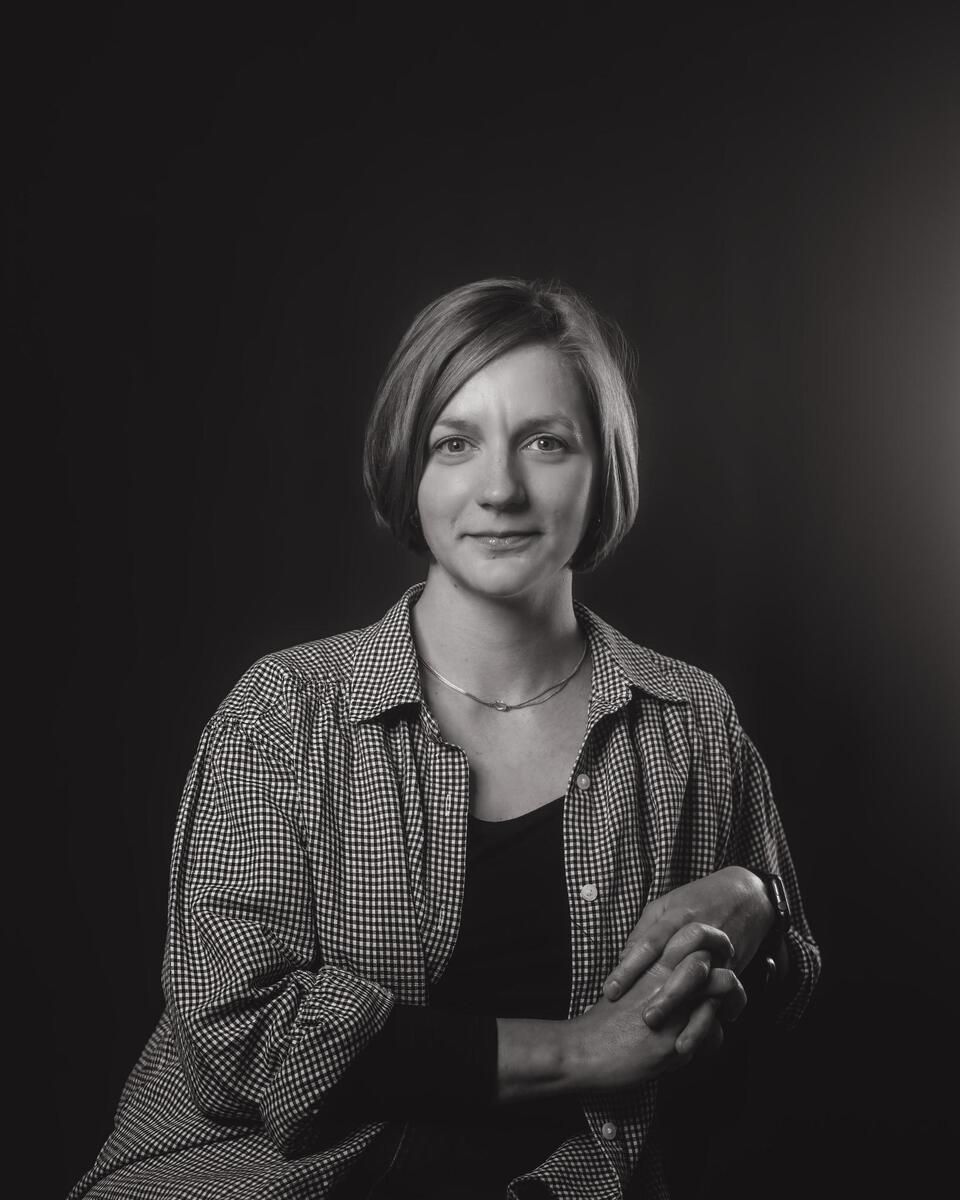
I’m Andra 👋 I transitioned into an alternative path after spending 12 years in tech. Now, I help ambitious professionals (often expats) navigate career transitions when the old playbook stops working.

I got to grow in my career, experiment, build a network across three continents, and feel like the world was wide open and full of opportunities available to me and my peers. It was a good time to be young and ambitious in tech.
I joined tech in 2013, straight out of university, landing my first role at a startup accelerator. Honestly, it felt like I'd stumbled into some kind of secret world, in the best sense possible. None of my friends at that time were working in startups, and they didn’t really understand what I did. But I loved it. The energy was contagious, people were building cool products, the vibe was collaborative, and it truly felt like the opportunities ahead of us were endless.
After I learned everything I thought I could in that first job, I left and quickly found something else. The new job came with higher pay, a better title and a pivot into a new type of work. I was expanding my horizons and growing quickly. I did this a few times over the next few years, and it never felt risky, because it wasn't. The job market was popping, and jobs were easy to come by.
Most millennials I knew working in tech were doing the exact same thing—hopping from role to role, building their careers on momentum without really thinking about where they were going. They were moving forward, fast, and that was enough.
Then everything shifted
The layoff wave
Around 2022, things started to shift. Inflation and rising interest rates curbed growth, investors got cautious, and companies that over hired during funding booms started laying people off.
in 2023, over 260,000 tech workers lost their jobs
in 2024 it was 238,000
in October 2025 the total number is 176,000, and growing every day
With these waves of mass layoffs, the promise of a stable career and endless possibilities in tech started to slowly crumble.
I felt this instability firsthand. The startup I joined in late 2022 had just raised hundreds of millions, but a month after I started, 30% of my colleagues were gone overnight. It was the first time I experienced the reality of layoffs and it was shocking.
The emotional impact of going through such a big change is also massive for the people who remain at the company, not to mention the life-changing impact for those losing their jobs from one hour to the next. In the aftermath of a layoff, almost everyone involved carries the emotional burden: feelings of guilt, confusion, frustration and anger.
This emotional stress, coupled (for those still employed) with the ongoing workload, can significantly impact one’s mental health and develop into burnout (source).
As for me, I stayed in the company, but the role I signed up to do just one month earlier changed. Suddenly, I was handling work left behind by people who'd been let go, doing work I hadn't signed up for. I felt like I no longer had a say in where my career was headed, and over time I started to feel trapped, but I also knew I couldn't just leave the way I used to. This was the first of several layoffs to follow, and the stories I was hearing from my peers in other startups were not dissimilar.
The vibe shift
By mid-2022, the job market had fundamentally changed. According to Gallup's latest workplace report, global employee engagement fell from 23% to 21% in 2024, a decline equal to the drop during COVID lockdowns. But here's the paradox: at the same time, fewer people were looking to leave. Typically, low engagement drives people to switch jobs, but in 2024, these moved in opposite directions.
The power dynamics had shifted entirely. Companies knew workers had nowhere to go, and some started pushing harder, expecting 996-style hours (nine hours a day, six days a week) while offering less in return. The New York Times perfectly captures this shift: Today, the tech has become harder, the perks are fewer and the mood has turned more serious.

NYT article, 4 Aug 2025
And while this shift is still landing in workplaces across Europe, many millennials hitting their peak earning years are realising they've spent the past decade building careers based on rules that suddenly changed. Without momentum carrying them forward, they find themselves in jobs that don't fulfil them, craving more impact, freedom, or growth, but unable to move the way they used to.
The AI factor

And then there's AI. While we were all busy navigating layoffs and a contracting job market, the ground shifted again. The World Economic Forum's 2025 Future of Jobs Report predicts that nearly 40% of workers' skills will become outdated in the next five years, with massive labour market churn affecting one in five jobs.
The views on how AI will impact the workforce range from techno-optimism (AI will bring prosperity and eliminate all ‘menial’ tasks) to doomerism (AI will replace most human workers and destroy the fabric of society). But there is no consensus on the actual impact on jobs yet, and certainly many questions remain unanswered at this point.
One thing is for sure though – the conditions for a hybrid future for work are absolutely present.
But here's what gives me hope
The skills rising fastest alongside technical abilities like AI and cybersecurity are deeply human ones – creative thinking, resilience, flexibility, curiosity and lifelong learning. The very skills you build when you get clear on what you want, stay curious about what's possible, and take courageous action even when you're scared.
Technology is changing everything, yes. But your ability to adapt matters more than ever, and that's exactly what this moment is asking of you.

What happens when momentum doesn't carry you forward anymore?
You feel stuck.
Being stuck feels like waking up with dread about opening your laptop. It feels like sitting in meetings without substance, working on projects you know won't move the needle. It's spending your workday mentally checked out and your evenings overthinking until you're exhausted. You're not moving forward, but you're not okay with staying still either. You're suspended in this terrible middle space where nothing feels right.
If you're nodding along to this, I need you to know: you're not alone. This isn't personal failure, it's a structural shift that caught a lot of us off guard. The industry changed, the job market contracted, and the old playbook doesn't work anymore.
But that doesn't mean you're stuck forever.
So how do you get out of this?
After spending months stuck in my last job, contemplating leaving, I realised I couldn't keep waiting for the market to get better or for the perfect opportunity to fall into my lap. I had to take control and create my next opportunity, taking into account my skills, interests, energy, and what I wanted in my life beyond work.
Getting unstuck came down to three things: clarity, curiosity, and courage.
I'm convinced all three are essential, and they work in this specific order. One without the others won't actually get you moving forward.
Here's how they work together:
Clarity is about knowing what’s important to you—what you're good at, what you want to continue doing and what you need to stop doing.
Curiosity is about expanding what you think is possible. It's giving yourself permission to imagine how things could be different, or even better than expected.
Courage is when you turn those insights into action. Because clarity and curiosity are great, but if they stay in your head, they're just nice ideas. The only way out of being stuck is by actually doing things.
This matters now more than ever. The ability to adapt isn't just nice to have, it's essential for surviving the next decade of work.
You've built a career that looks good on paper: solid skills, interesting roles, clear growth. But you want more than external success; you want fulfilment, work you actually enjoy. With decades of work still ahead, now is the time to figure out what truly matters to you and build around that instead.
Let me break down what this looks like in practice.
Clarity: figuring out what you actually want
We built our careers by saying yes to whatever exciting opportunity came next, optimising for external markers of success (salary, title, cool company name) without checking whether that fulfilled our deeper needs.
Clarity means reversing that pattern. It's getting specific about what matters to you in this phase of your life, and aligning your work with those needs.
Some questions that help:
What's making you want a change right now?
What are you trying to move away from, and what toward?
What's the bullshit you're no longer willing to tolerate?
What constraints do you need to account for in your next phase?
What skills and experiences do you want to build your next role upon?
For me, clarity came when I looked back and noticed a pattern: I'd always been drawn to roles where I operated independently, worked on strategic projects, and supported people as directly as possible. I liked being in touch with customers, learning at my own pace, and seeing immediate the impact of my work.
That clarity (understanding that autonomy and creative control were non-negotiables) played a huge role in my decision to transition to coaching full-time. It feels like a massive career pivot, and it is, but I get to build on the skills and interests that are most important to me, rather than start from scratch.
So what's true for you? What patterns reveal the elements you actually need to thrive?
Curiosity: expanding what's possible
We're born curious, but somewhere along the way we lose that playfulness. We start optimising for what's practical and expected rather than what fascinates us.
Getting curious again is about reclaiming that sense of possibility and giving yourself permission to explore without committing to anything.
In career transitions, you can tap into curiosity by asking questions like:
What project do I keep thinking about, even if I never start it?
If I didn't have to worry about money, what would I do?
What topics do I keep coming back to, even when they have nothing to do with my job?
What did I want to do as a child/teenager but didn't pursue because it wasn't "realistic"?
What problems would I like to solve?
A close friend spent years working in communications at a sustainability startup. But she kept finding herself drawn to politics, social justice, and policy beyond just environmental issues. She got curious about that pull. Today, she runs communications for a political party, where her work touches climate, human rights, and social inclusion all at once.
And here's the important part: being curious doesn't mean committing to anything. You're just allowing yourself to explore and reconnect with parts of yourself you've set aside because they didn't fit the professional box you've been trying to squeeze into.
Courage: turning insights into action
When I left my job to build my coaching practice, people kept telling me how brave I was. And yes, it took courage. But that courage didn't appear out of nowhere. I built it by understanding what the move required, why I wanted it, and whether I could handle what was ahead.
You see why these three pieces have to go together, in this order?
The scariest action I took wasn't quitting my job. It was telling people what I was doing. I remember drafting messages to my network, trying to find the words to say 'I'm building a coaching practice now' without sounding naive or cliché. Every part of me wanted to wait until I had it all figured out, until I felt more legitimate.
But I went ahead and shared anyway, and even if clients didn’t come knocking on my door suddenly, I got a lot of support; some friends forwarded my name to someone who needed a coach, another friend invited me on her podcast, even cold inquiries came in. So, slowly, the business started taking shape, and not because I had it all figured out, but because I'd started moving.
That's what courage looks like in practice, not the absence of fear, but action before you feel ready. And while courage gets you to the starting line, accountability keeps you running.
In my coaching work, the people who get unstuck don't wait until they're ready, they just start taking small actions that compund.
Someone finally shares a piece of work they’ve been keeping for themselves for weeks. Someone books the coffee chat that makes them nervous, and launches into their networking phase. Someone tells their manager "I need to talk about my role" even though they don't know exactly what they want yet.
The momentum you lost? You rebuild it through small actions that add up over time.
So here's your assignment: Pick one small scary thing from your list and do it by next Friday. Then see what happens :)
What clarity, curiosity, and courage unlock
When you actually do this work, you stop second-guessing every decision. You know what you're optimising for, so when opportunities come up, you can evaluate them quickly instead of spiralling for weeks. You're not wondering if you should stay or go; you're making moves based on what you actually want.
What that looks like in practice: you wake up without dread. Your work energises you instead of draining you. You make decisions in days, not months, and your career fits your life instead of consuming it.
I've been where you are: stuck between knowing you need change and not knowing how to start. You don't have to figure this out alone.
I work with people who built their careers on momentum and now need to build them on purpose.
If you recognise yourself in this and want structured support to work through clarity, curiosity, and courage with someone who's been there, let’s chat.

If you made it to the end, I’d love to hear your thoughts. What resonated? Have you had a similar experience? Send me a note at [email protected], I read everything.